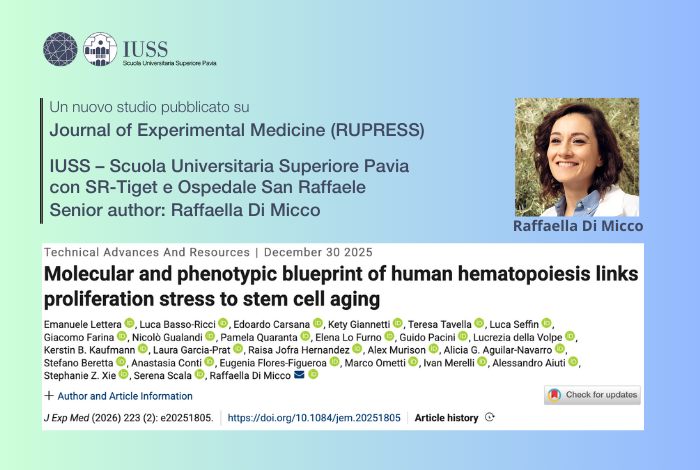
Blood stem cells play a vital role throughout life: they continuously generate new blood cells and help the immune system function properly. However, as we age, these cells also undergo changes, contributing to a gradual decline in the body’s regenerative capacity.
A new study published in the Journal of Experimental Medicine (RUPRESS), resulting from a collaboration between IUSS – Scuola Universitaria Superiore Pavia, the San Raffaele Telethon Institute for Gene Therapy (SR-Tiget) and San Raffaele Hospital, provides a detailed quantitative analysis of how hematopoiesis—the process of blood cell production—changes across the human lifespan.
The research sheds light on key biological mechanisms affecting blood stem cell function during ageing, with potential implications for the study of hematological diseases and for the development of improved therapeutic strategies in the future.
Read the full study on RUPRESS: Molecular and phenotypic blueprint of human hematopoiesis links proliferation stress to stem cell aging
The study lists Raffaella Di Micco (IUSS Pavia – San Raffaele Telethon Institute for Gene Therapy – SR-Tiget and San Raffaele Hospital) as last and senior author, further highlighting the group’s strong commitment to cutting-edge research on the cellular and molecular mechanisms of ageing.